01 The photographer
One session. Someone captures it.
A friend on the beach, a family member with a phone or a professional photographer captures the session. BeachHero gives both sides a place to meet.
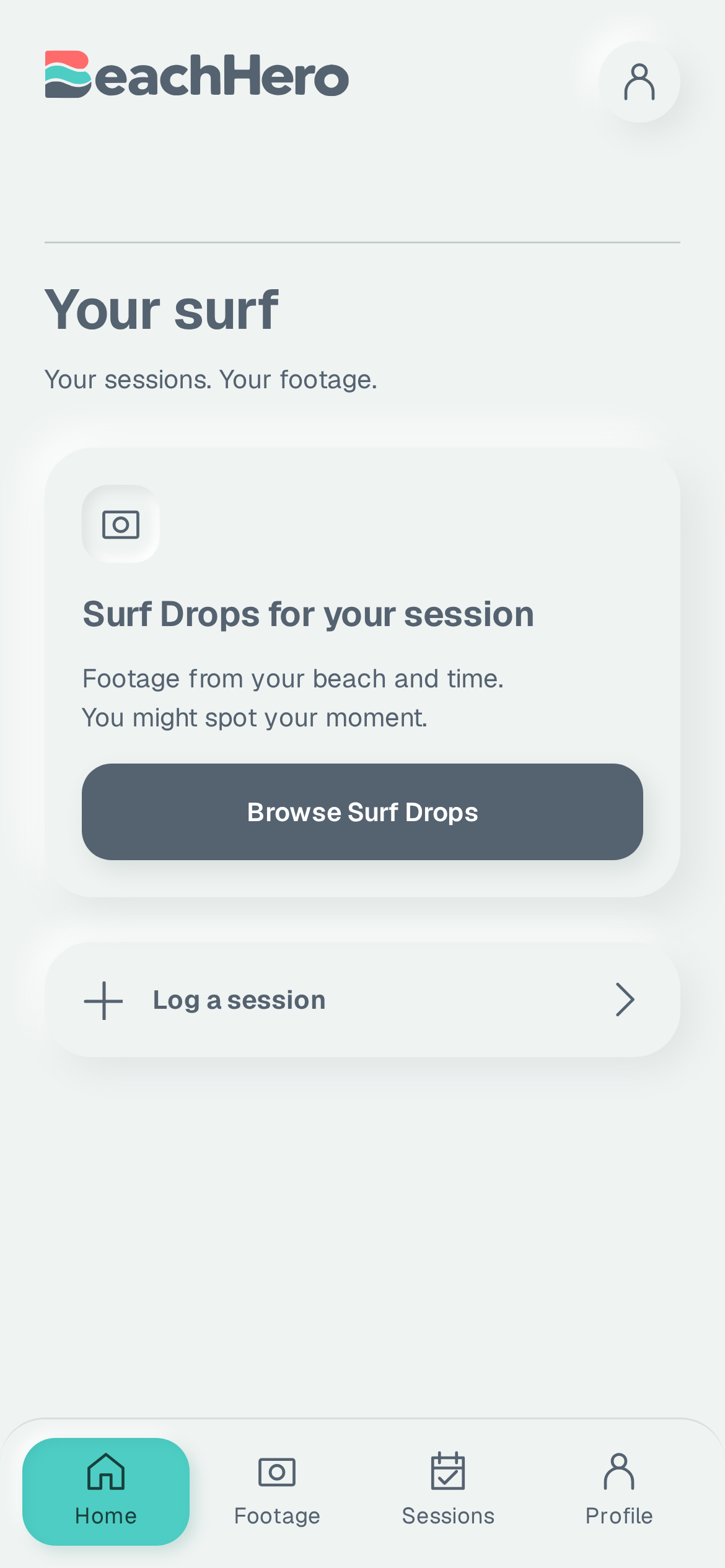

BeachHero is a social app for surfers and anyone behind the camera. Find footage from your session, or share the moments you captured—whether you’re a friend, family member or professional photographer.
01 / THE PRODUCT
BeachHero connects surfers with friends, family and photographers who capture the session. A Surf Drop is a collection of footage from one session.
Sample screens show the product direction. Native geofencing is planned; the web app uses manually entered session details.
01 The photographer
A friend on the beach, a family member with a phone or a professional photographer captures the session. BeachHero gives both sides a place to meet.
02 The photographer → the surfer
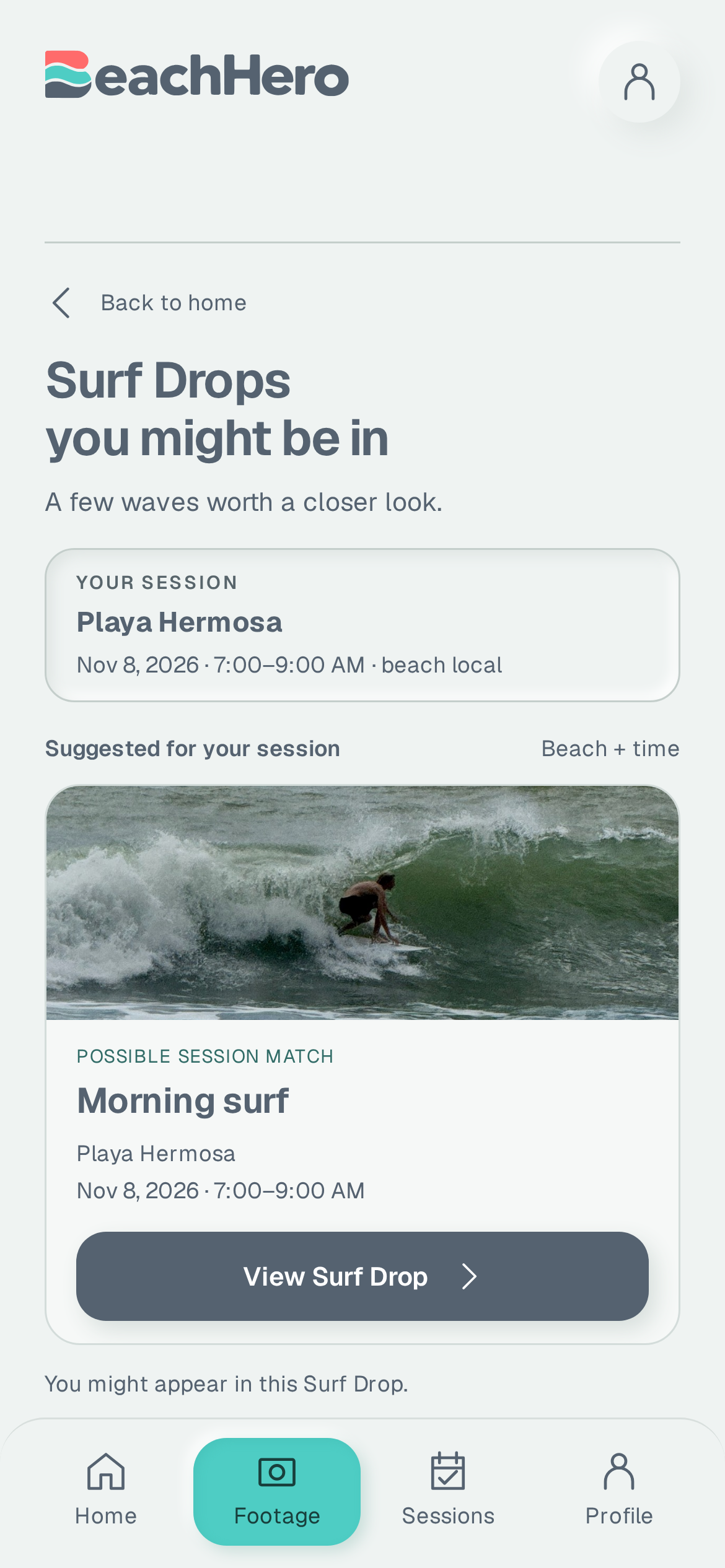
The photographer adds the beach and time to a Surf Drop and uploads their footage. The surfer searches using the same beach and session time. Planned geofencing in the native app will help capture those session details. For now, people enter them manually on the web.
03 The surfer
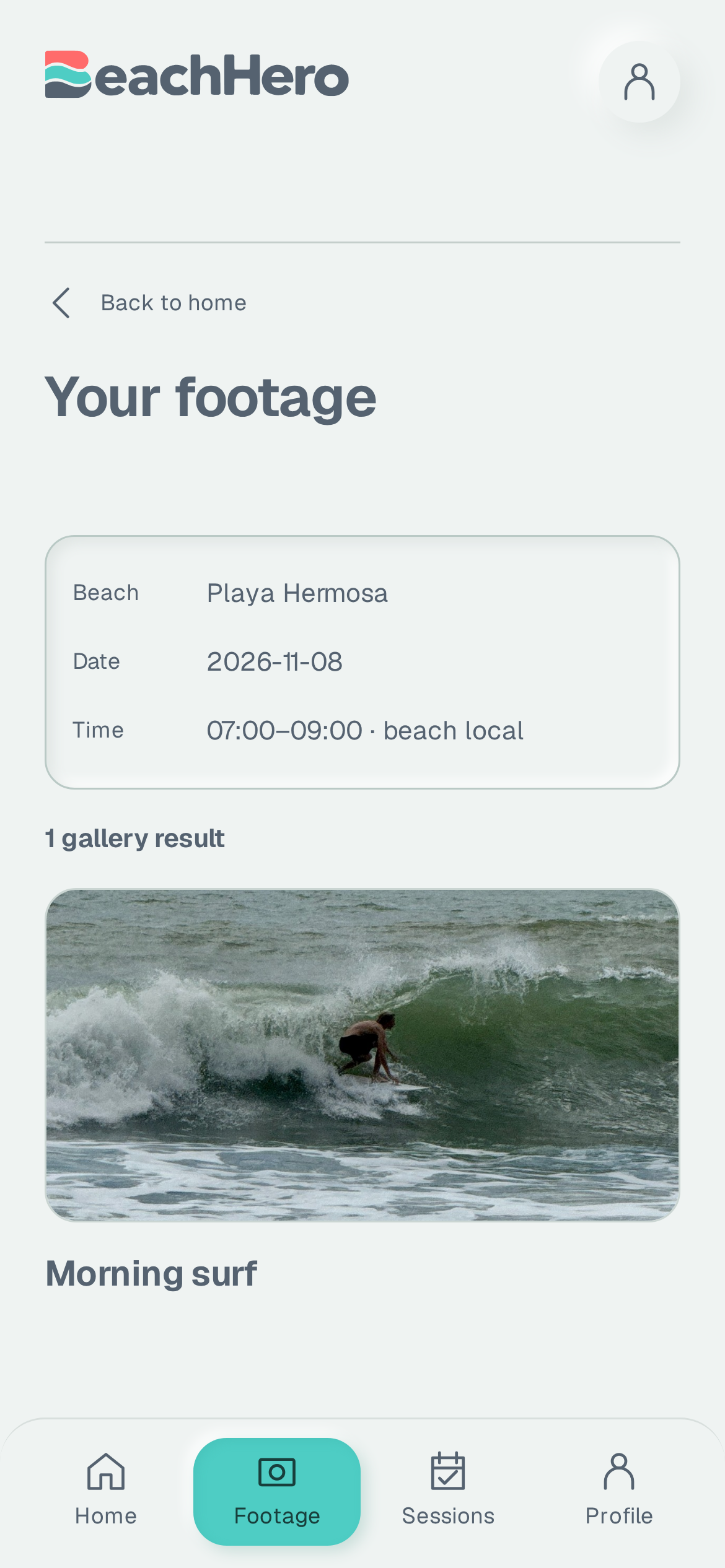
Browse the session results. Open a preview and look for your moment, without searching through scattered posts or messages.
I use principles from software engineering books to shape Atlas’s instructions and workflow. Atlas is my orchestrator: it breaks goals into tasks, coordinates specialist agents and brings review findings back to me. I define how it should work—not just what it should build.
This is instruction and workflow design, not retraining the underlying AI model. The books provide guidance; code review and real tests still have to check the result.
Choose a technology, tool or review role to see how it fits.
The product’s foundations, not services running inside this showcase.
Tools support scoped work. The founder sets direction and approves release.
Current checks use temporary AI roles and test tools. Dedicated specialist agents are planned. AI role tests help find friction. Real people must still test the product.